More than two thousand years ago, practitioners of traditional Chinese medicine developed a detailed map of the human body — a system of pathways and points through which they believed the body's vital energy, or qi, flowed. Among the most significant points in this system are the Back Shu points: a series of acupuncture points located along the inner bladder meridian, running parallel to the spine on both sides.
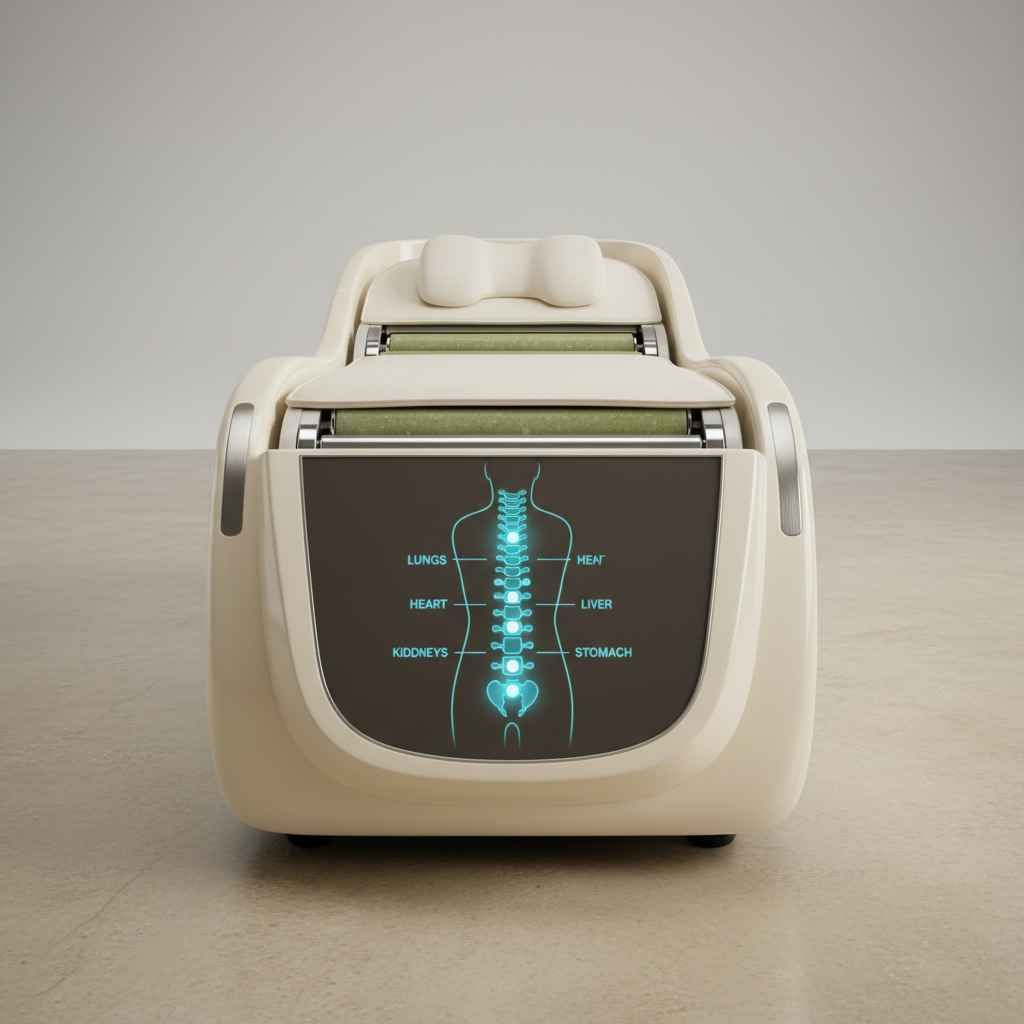
What makes the Back Shu points particularly fascinating is their correspondence to the body's vital organs. Each point is associated with a specific organ — the lungs, heart, liver, kidneys, stomach, and others — and is believed to influence the health and function of that organ when stimulated.
The Back Shu Points: A Closer Look
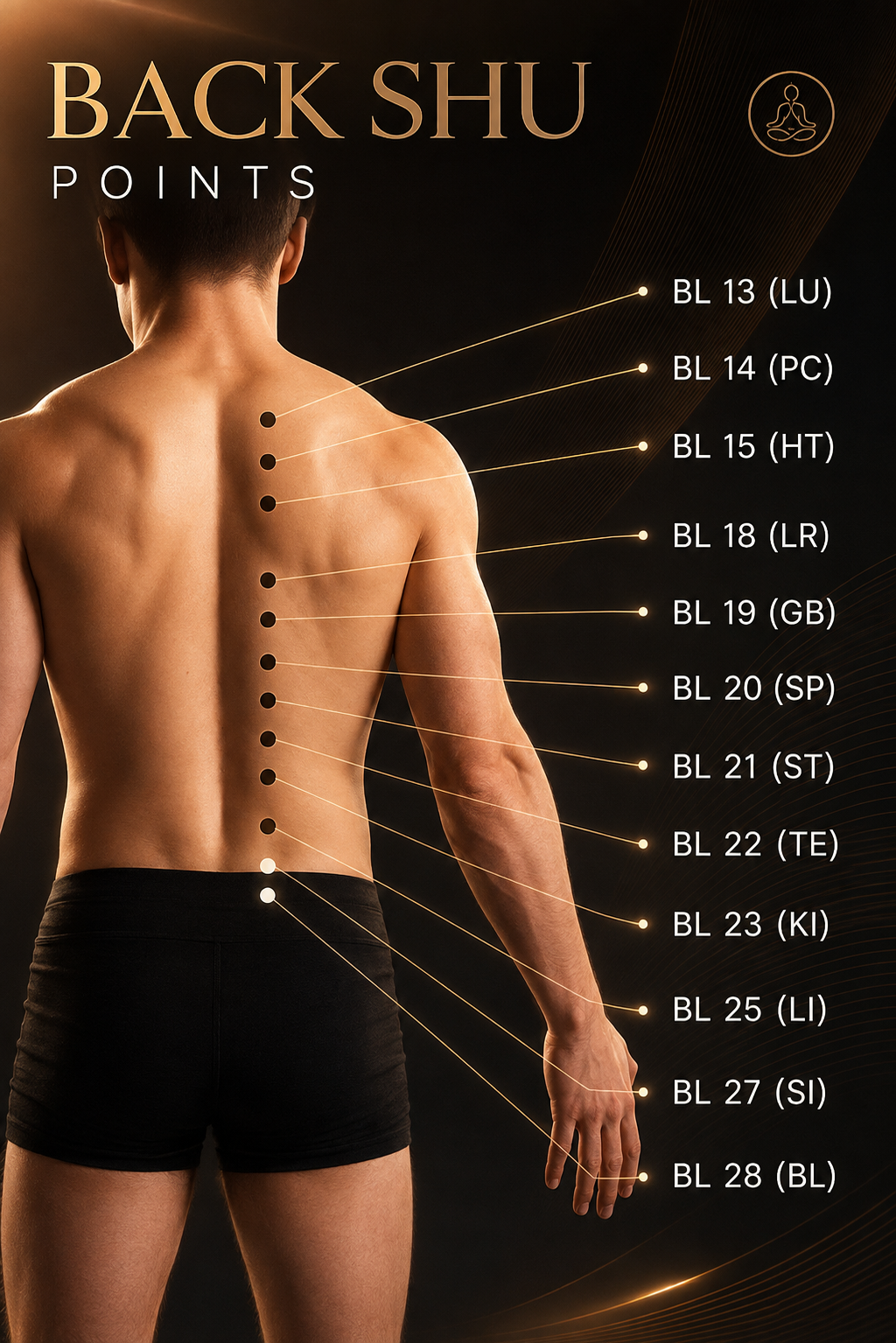
The Back Shu points are located approximately 1.5 cun (a traditional unit of measurement roughly equivalent to the width of the thumb) lateral to the midline of the spine. They run from the upper thoracic region down through the lumbar area, with each point corresponding to a specific vertebral level and organ.
For example, the Lung Shu point (BL 13) is located at the level of the third thoracic vertebra. The Heart Shu point (BL 15) is at the fifth thoracic vertebra. The Liver Shu (BL 18) is at the ninth thoracic vertebra. The Kidney Shu points (BL 23) are at the second lumbar vertebra — a location that many people intuitively associate with lower back vitality.
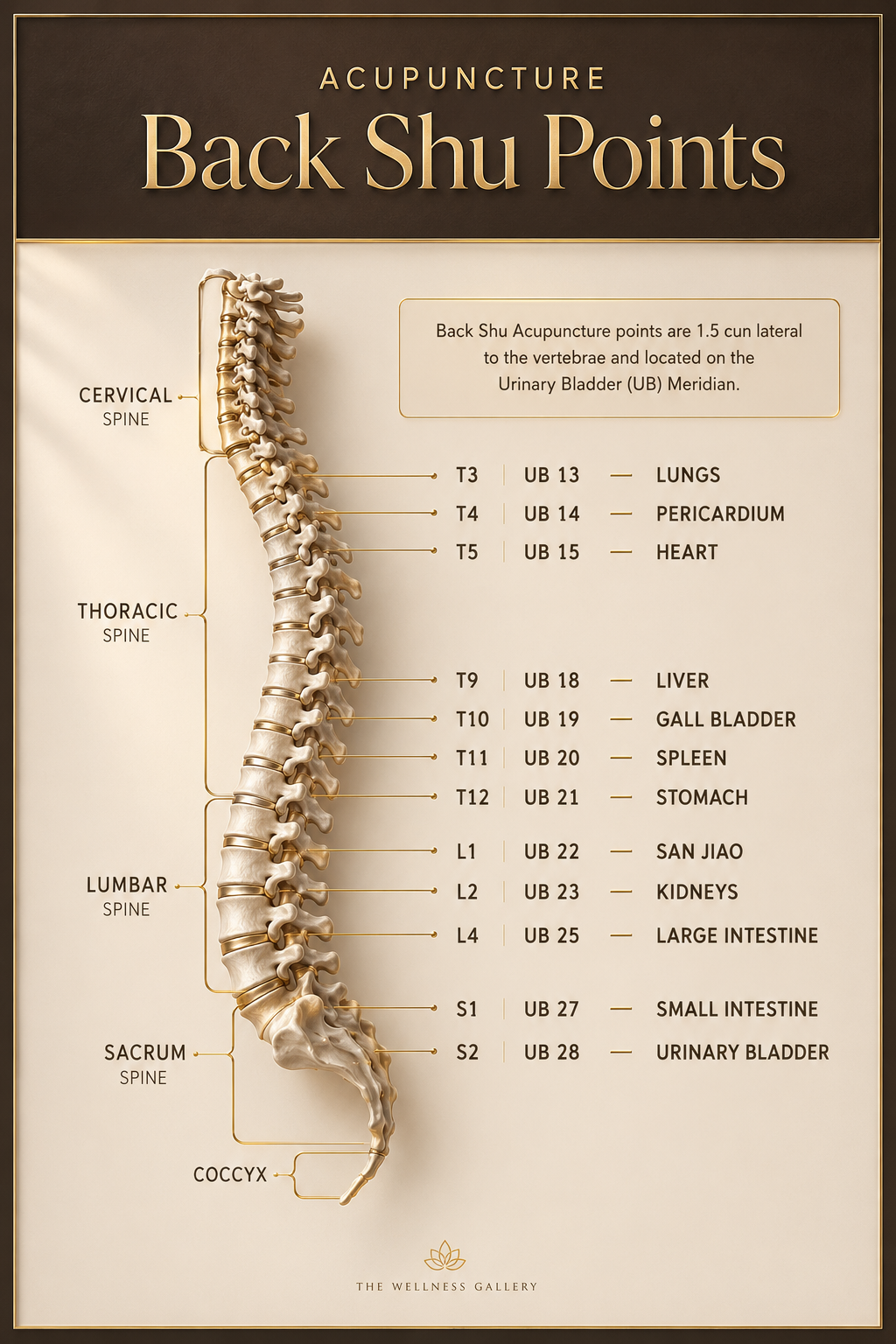
- BL 13 (Lung Shu) — 3rd thoracic vertebra: associated with respiratory health and the lungs.
- BL 15 (Heart Shu) — 5th thoracic vertebra: associated with cardiovascular health and the heart.
- BL 18 (Liver Shu) — 9th thoracic vertebra: associated with liver function and emotional balance.
- BL 20 (Spleen Shu) — 11th thoracic vertebra: associated with digestion and the spleen.
- BL 23 (Kidney Shu) — 2nd lumbar vertebra: associated with kidney health, vitality, and lower back strength.
- BL 25 (Large Intestine Shu) — 4th lumbar vertebra: associated with digestive health.
Why the Spine Is Central to Oriental Medicine
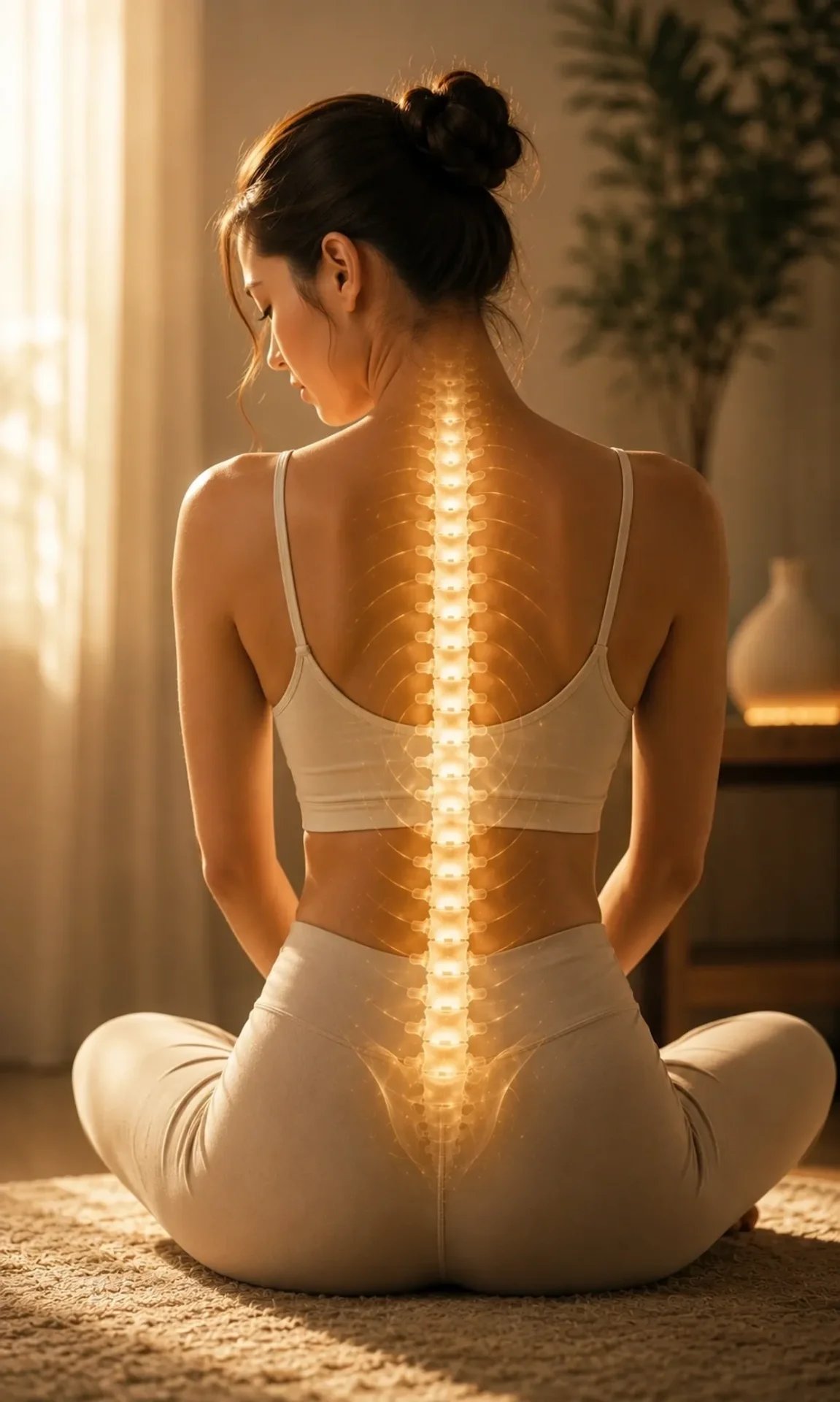
In traditional Chinese medicine, the spine is understood as far more than a structural support. It is the central axis of the body's energy system — the pathway through which the governing vessel (Du Mai) runs, and alongside which the bladder meridian (the longest meridian in the body) travels.
The bladder meridian runs from the inner corner of the eye, over the top of the head, down the back of the neck, along both sides of the spine, through the buttocks, and down the back of the legs to the little toe. Its path along the spine is where the Back Shu points are located — making the spine a central hub of the body's energetic map.
How CERAGEM Technology Engages the Back Shu Points
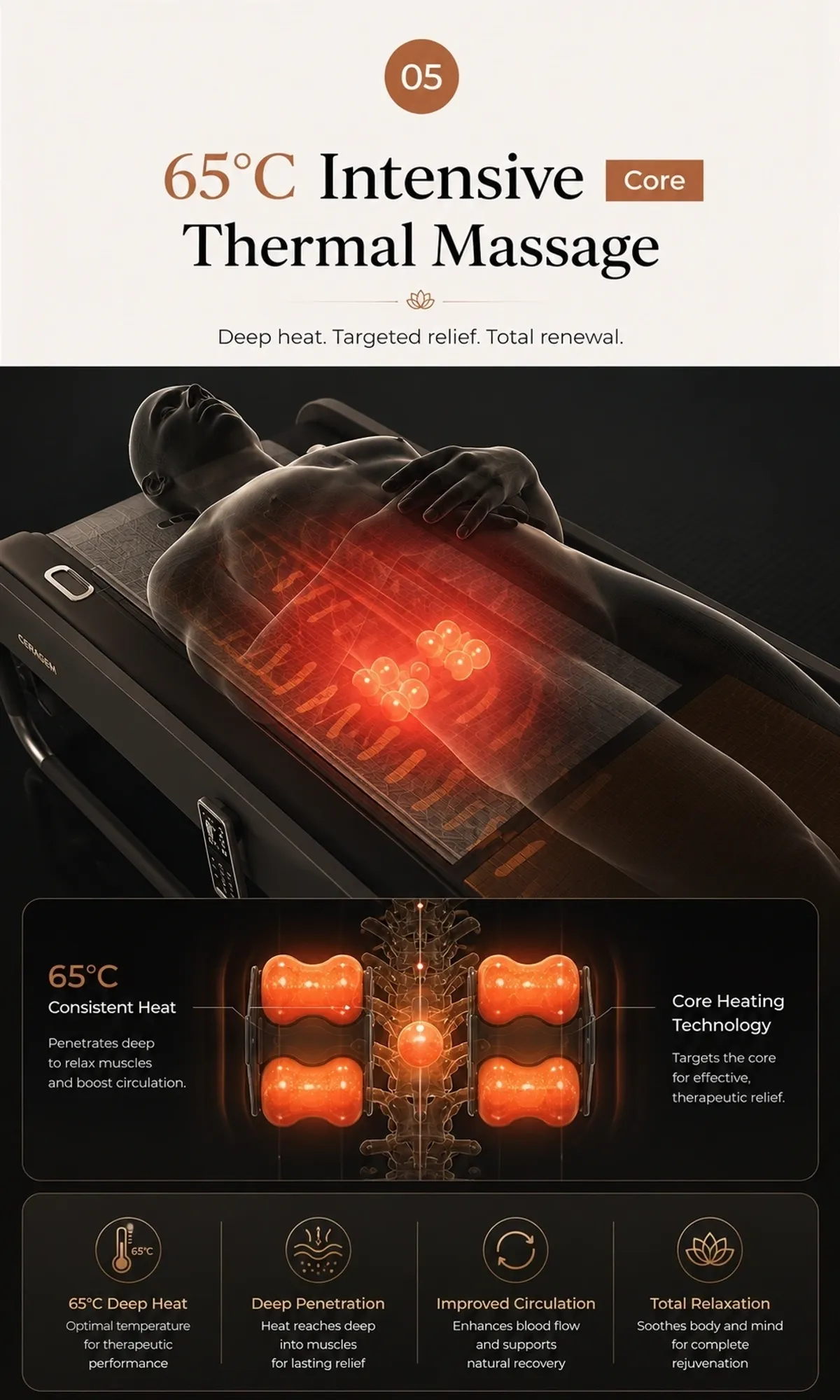
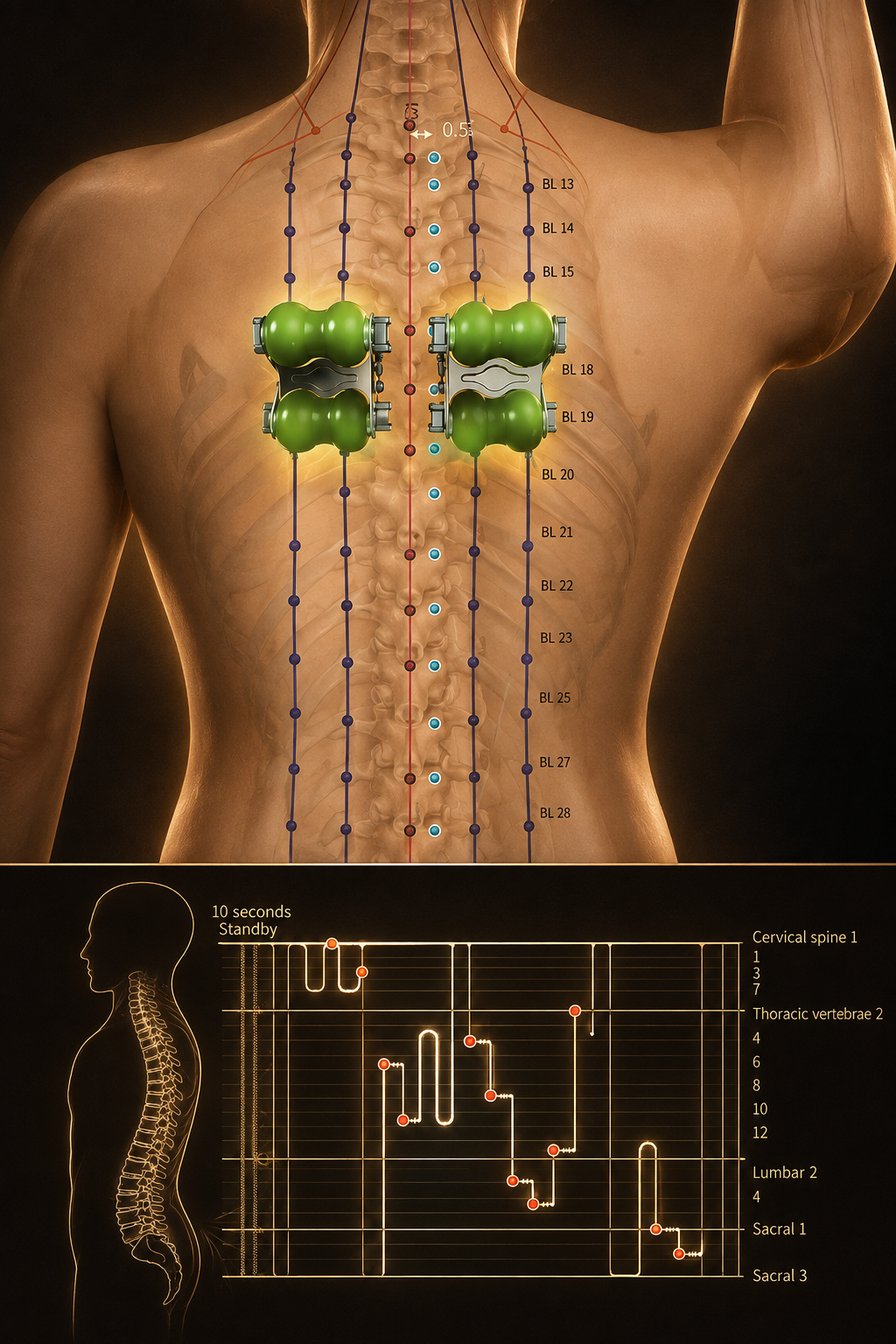
The CERAGEM Master V4 was designed with the Back Shu points in mind. Its jade projectors travel along the length of the spine, delivering far infrared thermal heat and massage at each vertebral level — including the locations of the major Back Shu points.
This is not coincidental. CERAGEM's approach to spinal wellness is rooted in the integration of modern thermal technology with the principles of traditional oriental medicine. The V4's scanning function first measures the individual's spinal length and curvature, then customizes the movement of the projectors to match — ensuring that the thermal and massage stimulation is delivered at the precise points along each person's unique spinal map.
East Meets West: A Complementary Perspective
It is worth noting that the Back Shu points and their organ correspondences are concepts from traditional Chinese medicine — a system of thought that differs fundamentally from Western biomedical science. The mechanisms proposed in traditional medicine are not always directly equivalent to those recognized in modern anatomy and physiology.
What is clear, however, is that the spine is anatomically connected to the body's vital systems through the nervous system. The spinal cord and the nerves that branch from it at each vertebral level do innervate the body's organs — a fact that modern neuroscience and traditional oriental medicine, in their different ways, both recognize.
- Visit the CERAGEM Shaw Wellness Lounge in Mandaluyong to experience the CERAGEM Master V4.
- Our wellness team will explain how the V4's spinal scanning and Back Shu point stimulation work.
- Book your session at ceragemshaw.com/visit.
Educational Disclaimer: The information in this article is for general wellness and educational purposes only. Traditional Chinese medicine concepts are presented for informational purposes and do not constitute medical advice. Consult a qualified healthcare professional for personalized health guidance.