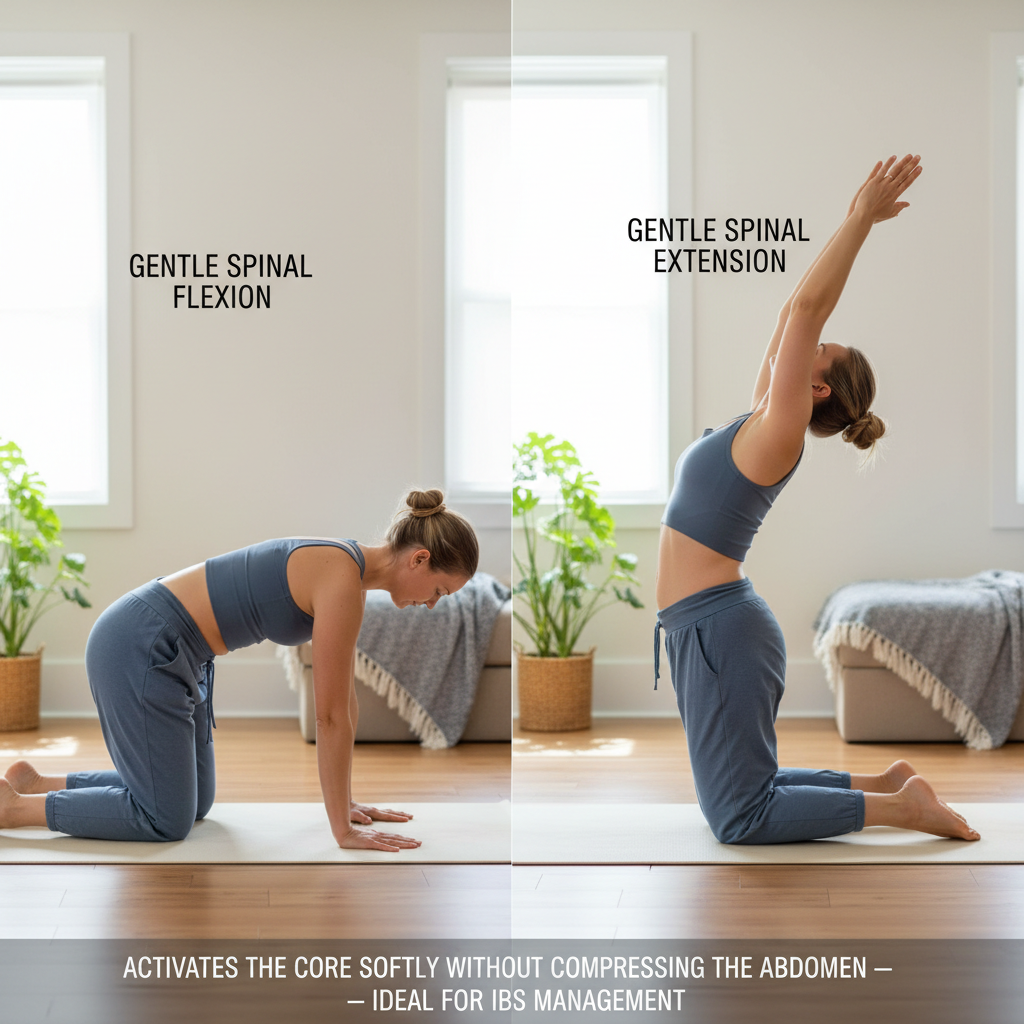
Most people only start thinking about their spine when something goes wrong — a stiff back after a long flight, a sore neck after hours at a desk, or that familiar ache that appears by the end of a long work week.
But your spine is working for you every hour of every day, whether you think about it or not. It supports your posture when you sit, protects your nervous system when you move, and plays a role in how rested or fatigued you feel when you wake up in the morning.
What Your Spine Actually Does
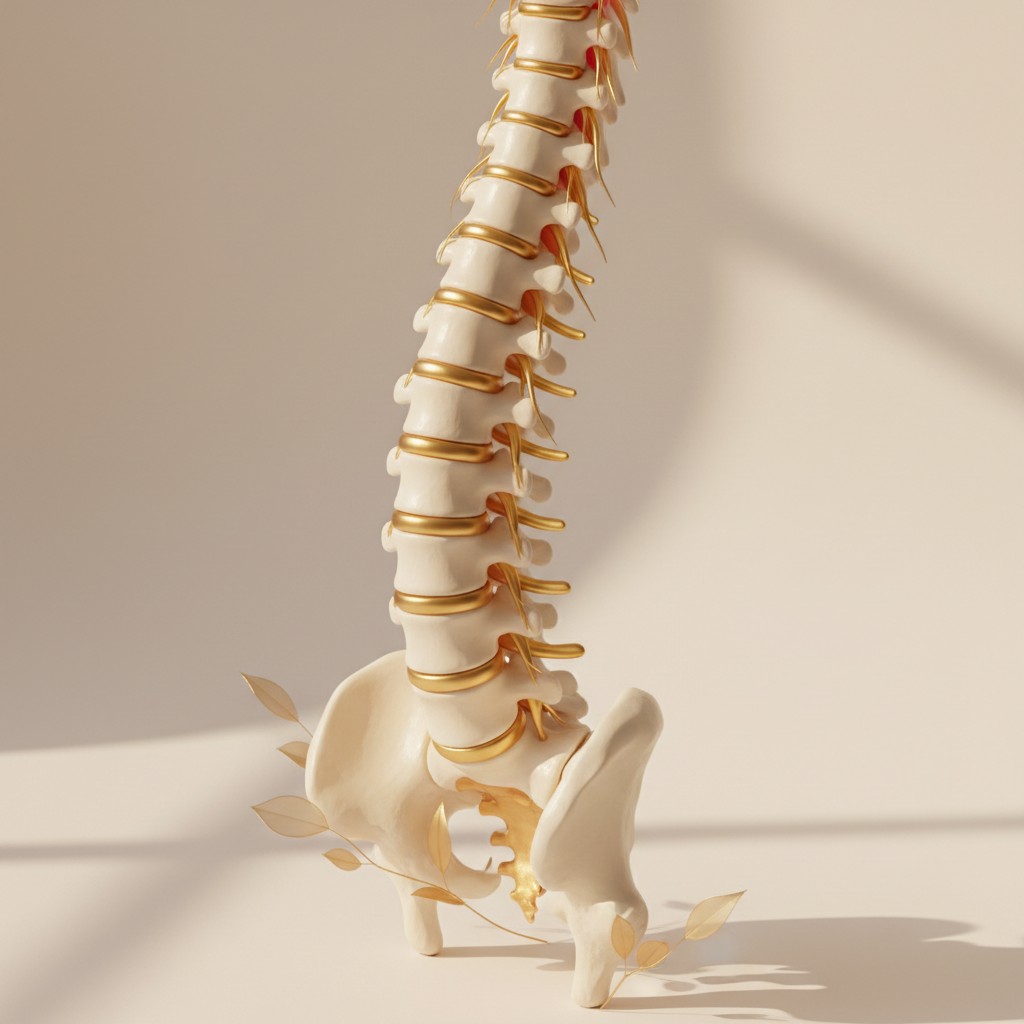
The spine is a column of 33 vertebrae that runs from the base of your skull to your tailbone. Between each vertebra is a disc — a cushion that absorbs impact and allows movement. The spine also houses and protects the spinal cord, the central pathway through which your brain communicates with the rest of your body.
But beyond its structural role, your spine is the foundation of almost every movement you make. Standing, sitting, walking, reaching, turning — all of these involve the spine in some way.
The Four Natural Curves
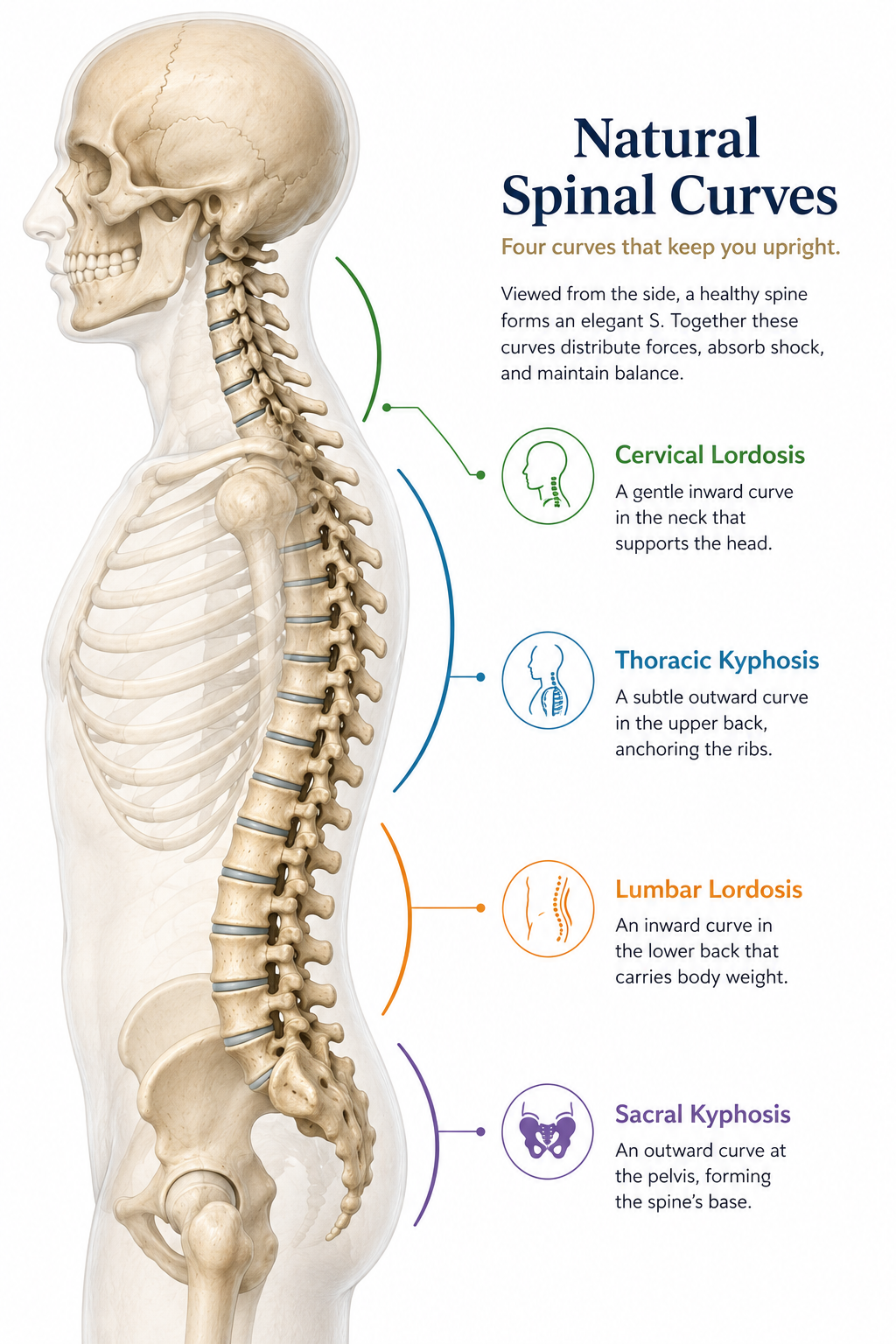
A healthy spine has four natural curves — two that curve inward (lordosis) at the neck and lower back, and two that curve outward (kyphosis) at the upper back and tailbone. These curves work together to distribute weight evenly, absorb shock, and maintain balance.
When these curves are disrupted — through prolonged sitting, poor posture, or lack of movement — it can place uneven stress on the muscles, ligaments, and discs that support the spine.
The average person spends between 6 and 10 hours sitting each day — in the car, at a desk, on the sofa. Over time, this prolonged static posture can affect how the muscles supporting your spine feel.
How Daily Habits Affect Your Spine
Your spine doesn't exist in isolation. The way you sit at your desk, the position you sleep in, the amount of movement you get throughout the day — all of these habits quietly influence how your spine feels over time.
Desk workers are particularly affected. When you sit for extended periods, the muscles supporting your lower back have to work harder to maintain an upright position. Over time, this sustained effort can contribute to the feeling of tightness and fatigue that many office workers notice by the end of the day.

The Role of Movement
The discs between your vertebrae don't have their own blood supply — they rely on movement to absorb nutrients and release waste products. When you sit still for long periods, this exchange slows down.
This is one reason why even brief periods of movement — standing, walking, or gentle stretching — can make a meaningful difference in how your back feels throughout the day.

Sleep, Stress, and Your Spine
Two factors that people often overlook in their spine wellness are sleep and stress. The position you sleep in affects how your spine is aligned for 6–8 hours every night — a significant portion of your day. And chronic stress can contribute to muscle tension throughout the body, including the muscles along your spine, neck, and shoulders.
Understanding these connections — between how you sit, how you sleep, how you manage stress, and how your spine feels — is the starting point for building better everyday wellness habits.

What You Can Do Today
- Notice how you're sitting right now. Are your feet flat on the floor? Is your lower back supported?
- Set a reminder to stand and move for 2–3 minutes every hour during your workday.
- Pay attention to how your neck and shoulders feel at the end of the day — and whether your sitting habits might be contributing.
- Consider your sleep position. Sleeping on your back or side with proper pillow support can help your spine stay aligned overnight.
- Create a short evening routine that includes some form of relaxation — even 10 minutes of light movement or quiet rest can support your body's natural recovery.

Small, consistent changes to how you sit, move, and recover can make a meaningful difference in how your body feels over time. The goal isn't perfection — it's building better awareness and habits, one day at a time.