Think about your average weekday. You wake up, sit at the breakfast table, sit in the car or commute, sit at your desk for most of the morning, sit through lunch, sit through the afternoon, sit on the way home, and sit on the sofa in the evening. By the time you go to bed, you may have spent 10 or more hours in a seated position.
For most professionals in Metro Manila — whether you're in Ortigas, Makati, BGC, or working from home in Mandaluyong — this is simply the reality of modern work. But what is all that sitting actually doing to your spine?
The Mechanics of Sitting
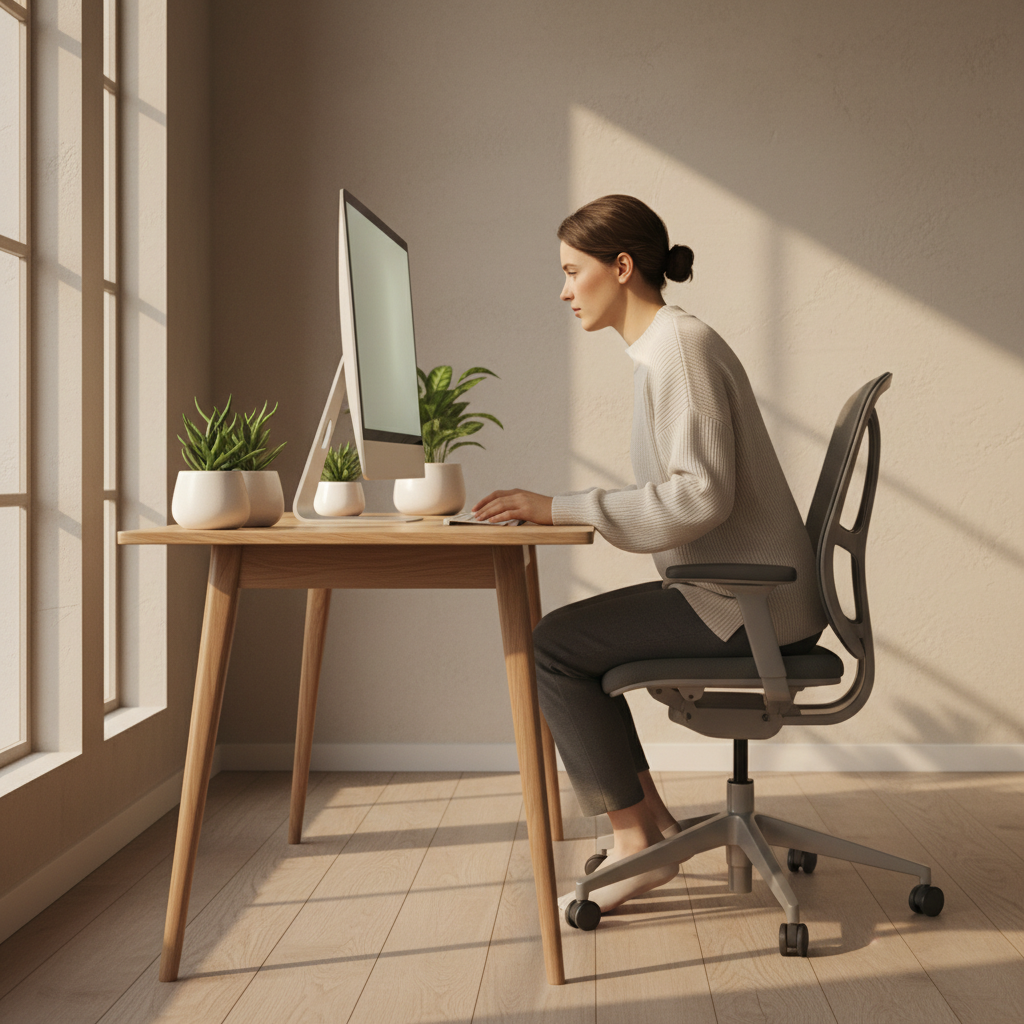
When you sit, your spine is not at rest — it's actively working. The muscles along your lower back, your hip flexors, and the muscles around your pelvis are all engaged to keep you upright. In a well-supported seated position, this load is manageable. But most people don't sit in a well-supported position for long.
Within minutes of sitting down, many people begin to slouch. The pelvis tilts backward, the lower back flattens, and the upper back rounds forward. This shifts the load from the muscles to the spinal discs and ligaments — structures that are not designed to bear sustained compressive force.
What Happens to Your Discs
The intervertebral discs — the cushions between your vertebrae — are under significantly more pressure when you sit than when you stand or lie down. Research has shown that sitting, especially in a forward-leaning position, can increase disc pressure by up to 40% compared to standing.
Over hours and years, this sustained pressure can affect the hydration and resilience of the discs. This is one reason why many people who spend long careers at a desk begin to notice more back discomfort as they age.
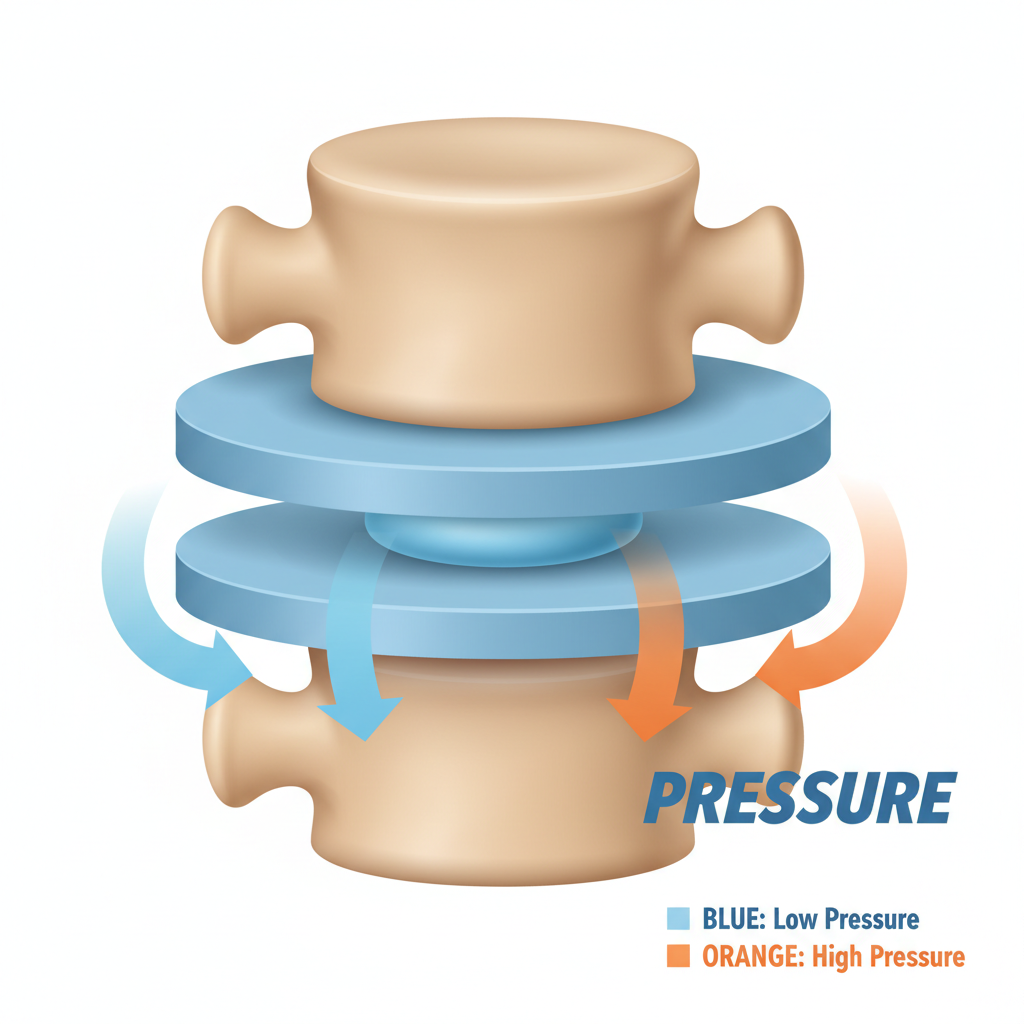
Intervertebral discs have no direct blood supply. They absorb nutrients and expel waste through movement — a process called imbibition. When you sit still for hours, this exchange slows significantly.
The Muscle Imbalance Problem
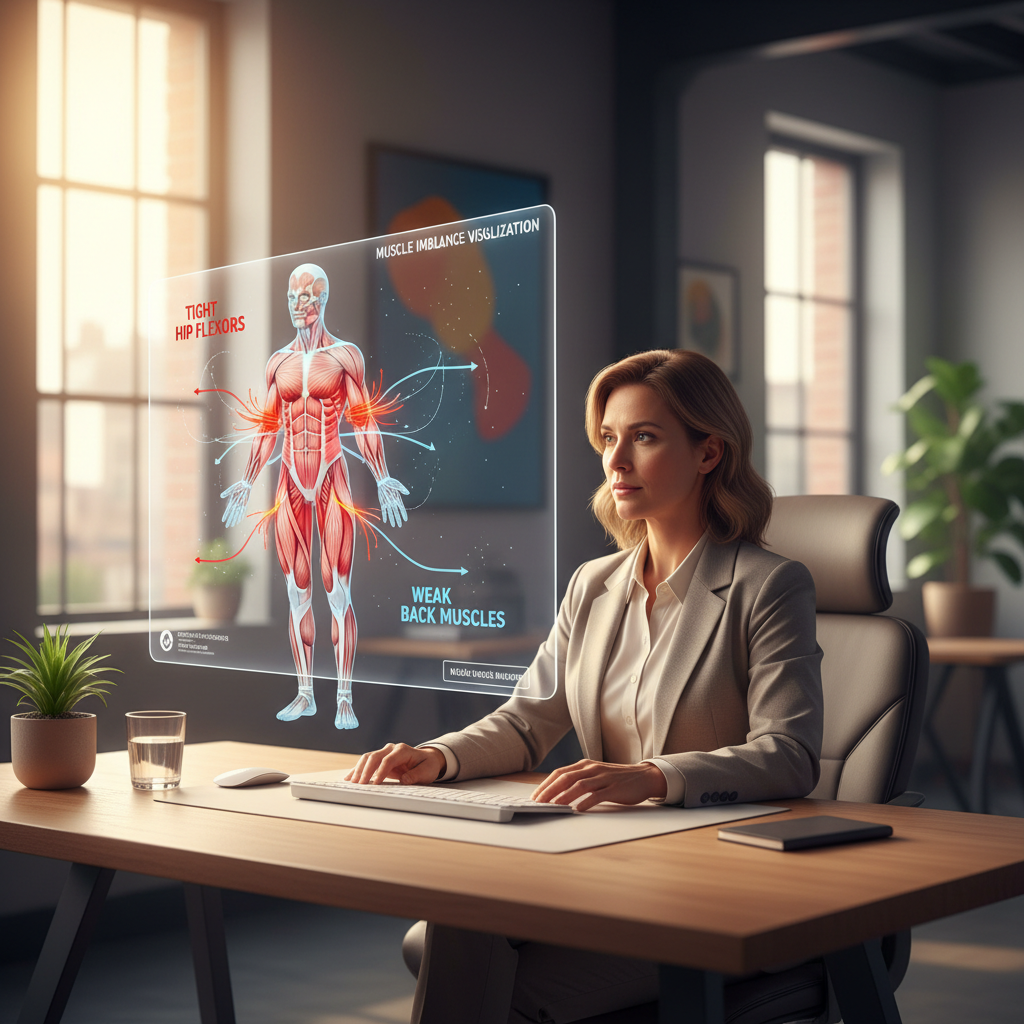
Prolonged sitting doesn't just affect your discs — it also creates muscle imbalances throughout your body. When you sit for extended periods, certain muscles become chronically shortened and tight (like your hip flexors and chest muscles), while others become lengthened and weak (like your glutes and upper back muscles).
This imbalance affects how your spine is supported when you stand and move. Tight hip flexors can pull your pelvis forward, increasing the curve in your lower back. Weak glutes mean your lower back muscles have to work harder to compensate. Over time, these compensations can contribute to the aches and fatigue that many desk workers experience.
The Circulation Factor
Sitting for long periods also affects circulation. When you're seated, blood flow to your lower limbs slows. Many people notice this as a feeling of heaviness or swelling in the legs and feet by the end of a long workday.
Reduced circulation also means that the muscles and soft tissues around your spine receive less oxygen and nutrients. This can contribute to the general feeling of fatigue and stiffness that accumulates over a long day at the desk.
What You Can Do Today
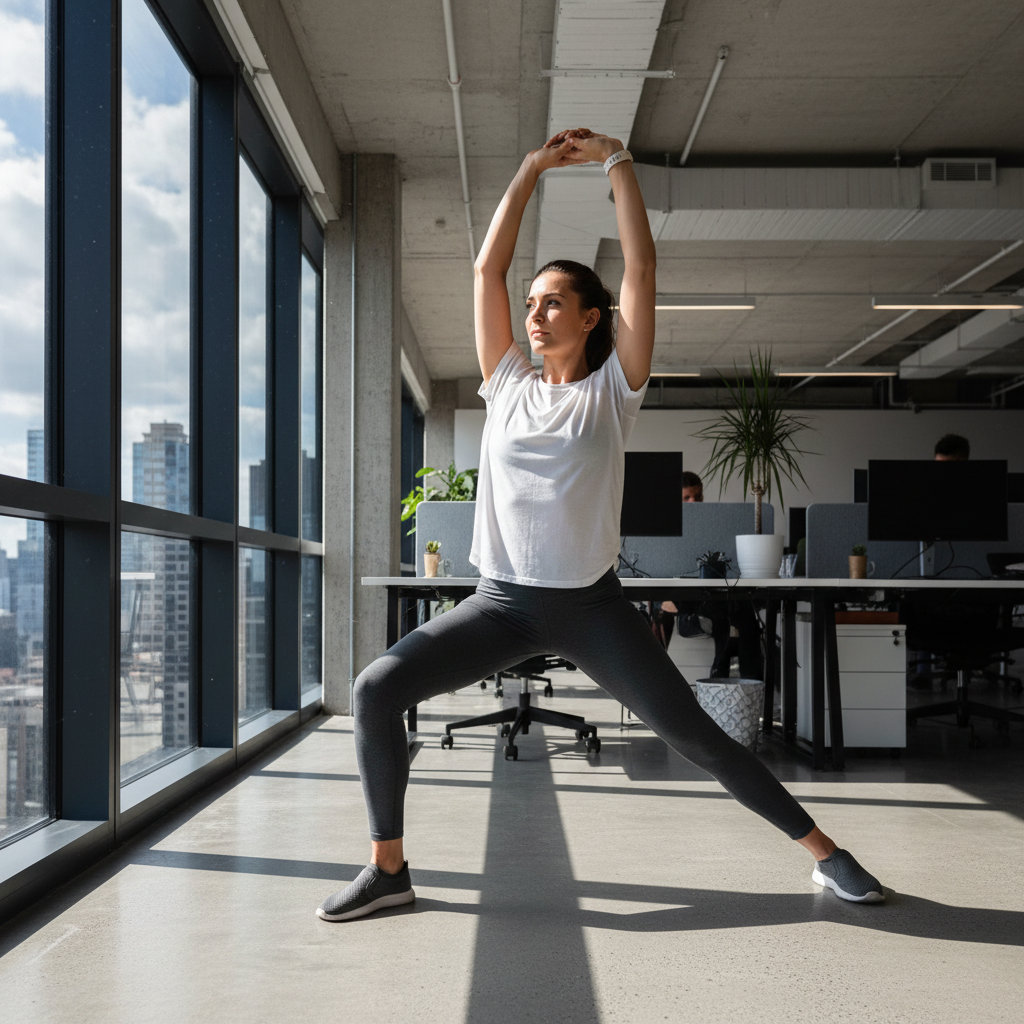
- Set a timer to stand and move for at least 2 minutes every 45–60 minutes.
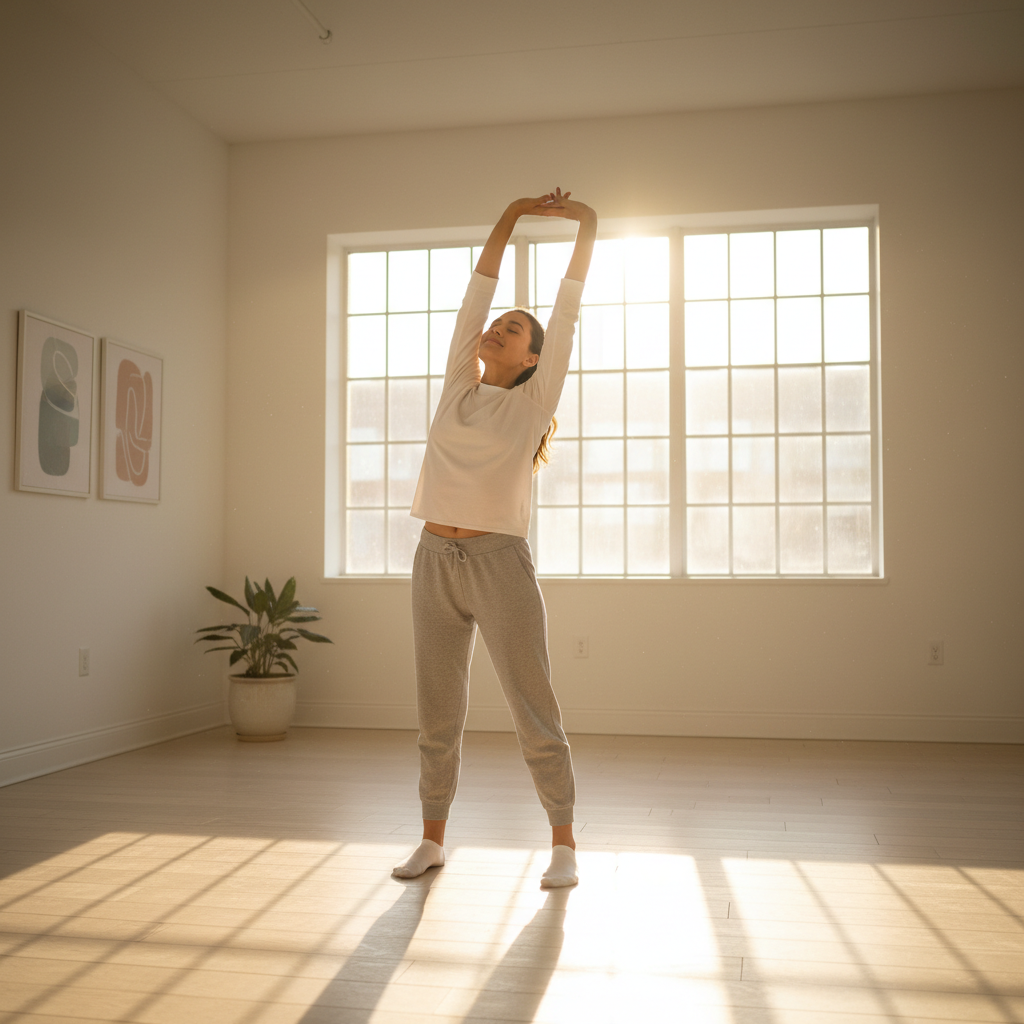
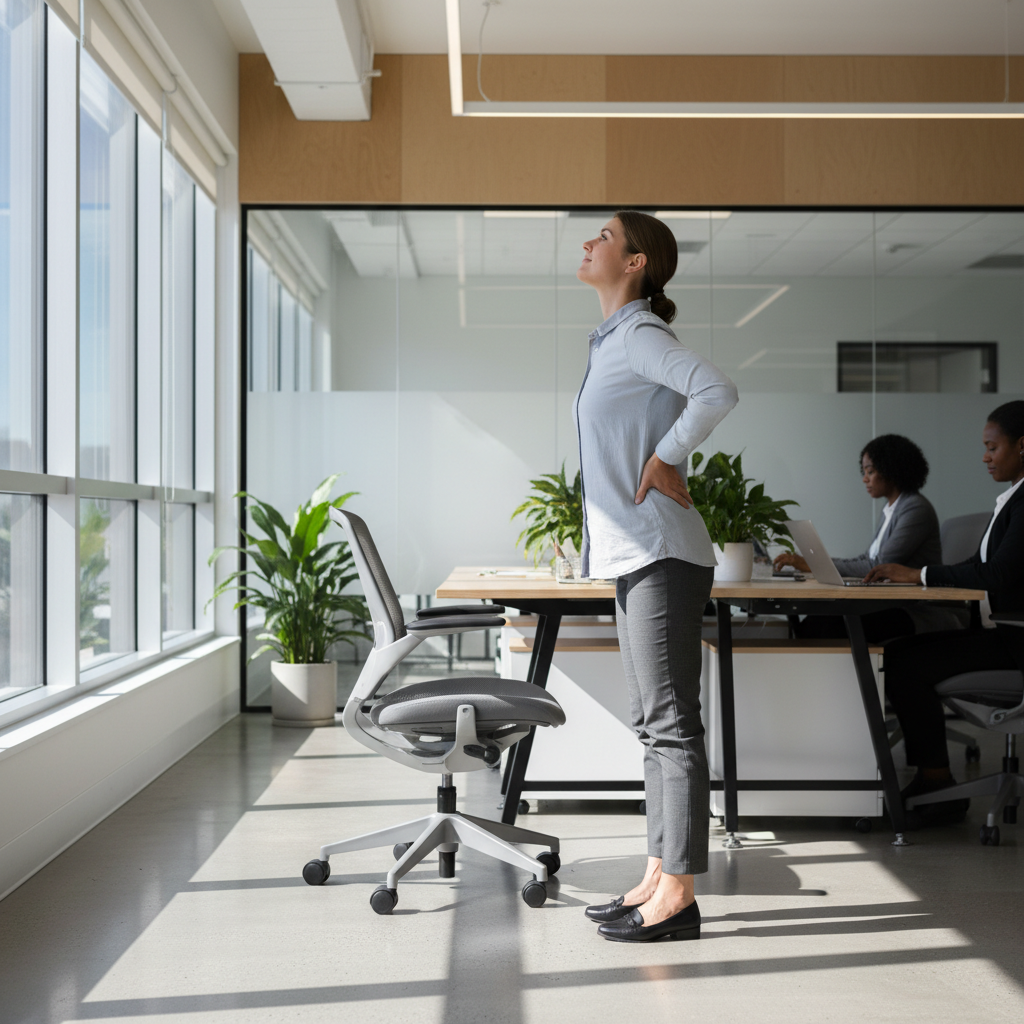
- When you stand up, take a moment to gently extend your lower back — this helps counteract the forward flexion of sitting.
- Check your chair height: your feet should be flat on the floor and your knees at roughly a 90-degree angle.
- Position your screen at eye level to reduce the forward head posture that comes from looking down at a screen.
- Consider a brief lunchtime walk — even 10 minutes of walking helps reset your posture and circulation.
- At the end of the day, spend a few minutes on gentle movement or stretching to help your body transition out of the sustained sitting position.
The goal isn't to eliminate sitting — that's not realistic for most professionals. The goal is to interrupt prolonged sitting with regular movement, and to be more intentional about how you sit when you do. Small, consistent changes can make a meaningful difference in how your body feels at the end of the day.