
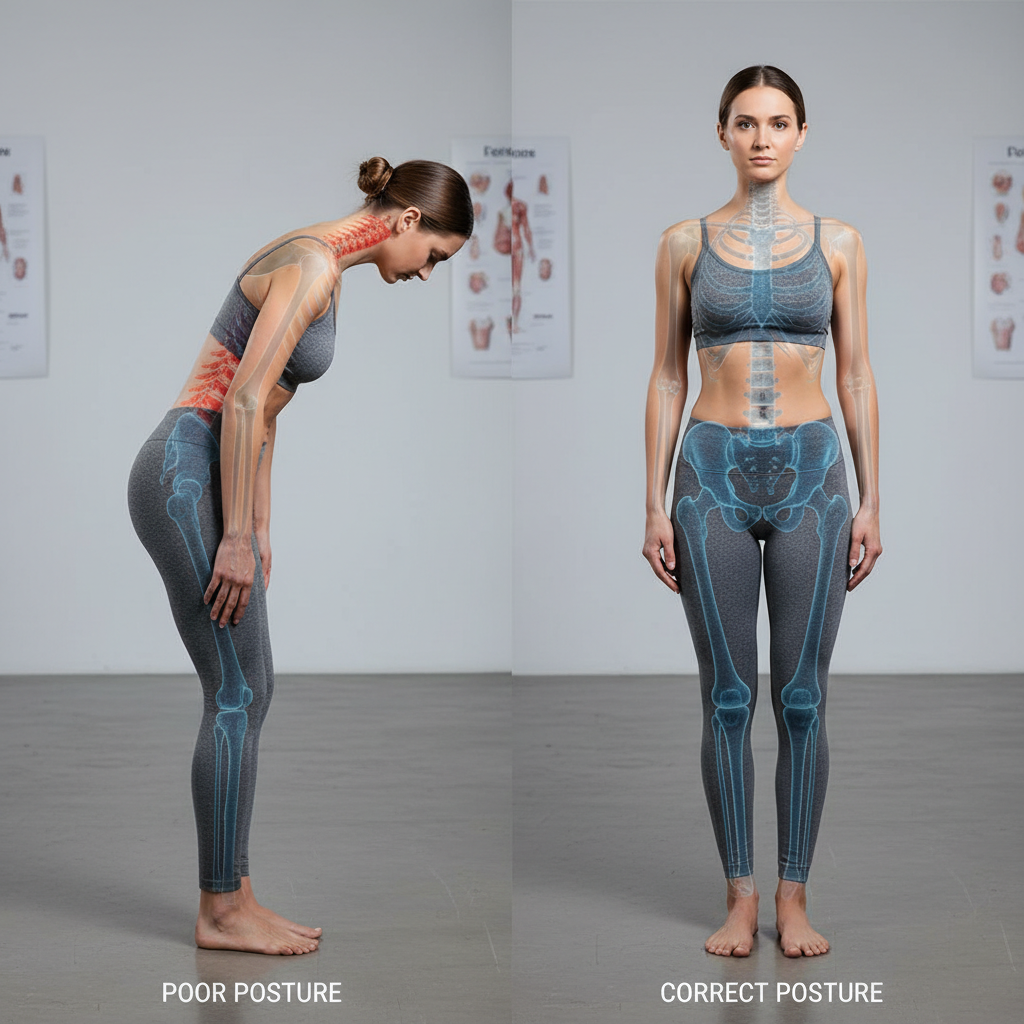
You've probably heard that poor posture is bad for your back. But the effects of sustained poor posture extend well beyond back discomfort. Many people who spend long hours at a desk report a general sense of fatigue, low energy, and even difficulty concentrating — and their posture may be a contributing factor.
The connection between posture and energy levels isn't immediately obvious, but it becomes clear when you understand the mechanics of what your body is doing when you slump.
The Energy Cost of Poor Posture
Maintaining an upright posture requires muscular effort. When your spine is well-aligned, this effort is distributed efficiently across multiple muscle groups, and the load is manageable. But when you slump — rounding your lower back, hunching your shoulders, jutting your chin forward — the load shifts to structures that aren't designed to bear it for long periods.
The muscles that are now working harder to compensate for poor alignment fatigue more quickly. And fatigued muscles require more energy to maintain even basic function. Over the course of a full workday, this inefficiency adds up — contributing to the general sense of tiredness that many desk workers feel by mid-afternoon.
The Breathing Connection
One of the less obvious ways that poor posture affects energy is through breathing. When you slump forward, your ribcage compresses and your diaphragm — the primary muscle of breathing — has less room to expand. This can subtly reduce the depth and efficiency of each breath.
Shallow breathing means less oxygen delivered to your muscles and brain with each breath. Over hours, this reduced oxygen supply can contribute to feelings of mental fog, low energy, and difficulty concentrating — symptoms that many people attribute to stress or poor sleep, but that may be partly driven by their posture.

Sit in your usual desk posture and take a deep breath. Now sit up tall, roll your shoulders back, and take another deep breath. Notice the difference in how much air you can take in. That difference is happening every breath, all day long.
The Nervous System Factor
The spine houses and protects the spinal cord — the central pathway of the nervous system. When the spine is in a sustained poor position, it can create tension in the surrounding soft tissues. This tension doesn't directly compress the spinal cord in most cases, but it can contribute to a general sense of physical unease and tension that the nervous system registers as stress.
There is also research suggesting that upright posture is associated with more positive mood states and higher energy levels, while slumped posture is associated with lower mood and fatigue. The relationship between body position and mental state is bidirectional — how you feel affects how you sit, and how you sit affects how you feel.
The Cumulative Effect
The fatigue associated with poor posture is rarely dramatic. It's not a sudden crash — it's a slow drain. You might notice it as a mid-afternoon slump, a difficulty concentrating in the late morning, or a general sense of heaviness that you can't quite explain. These subtle signals are worth paying attention to.
What You Can Do Today
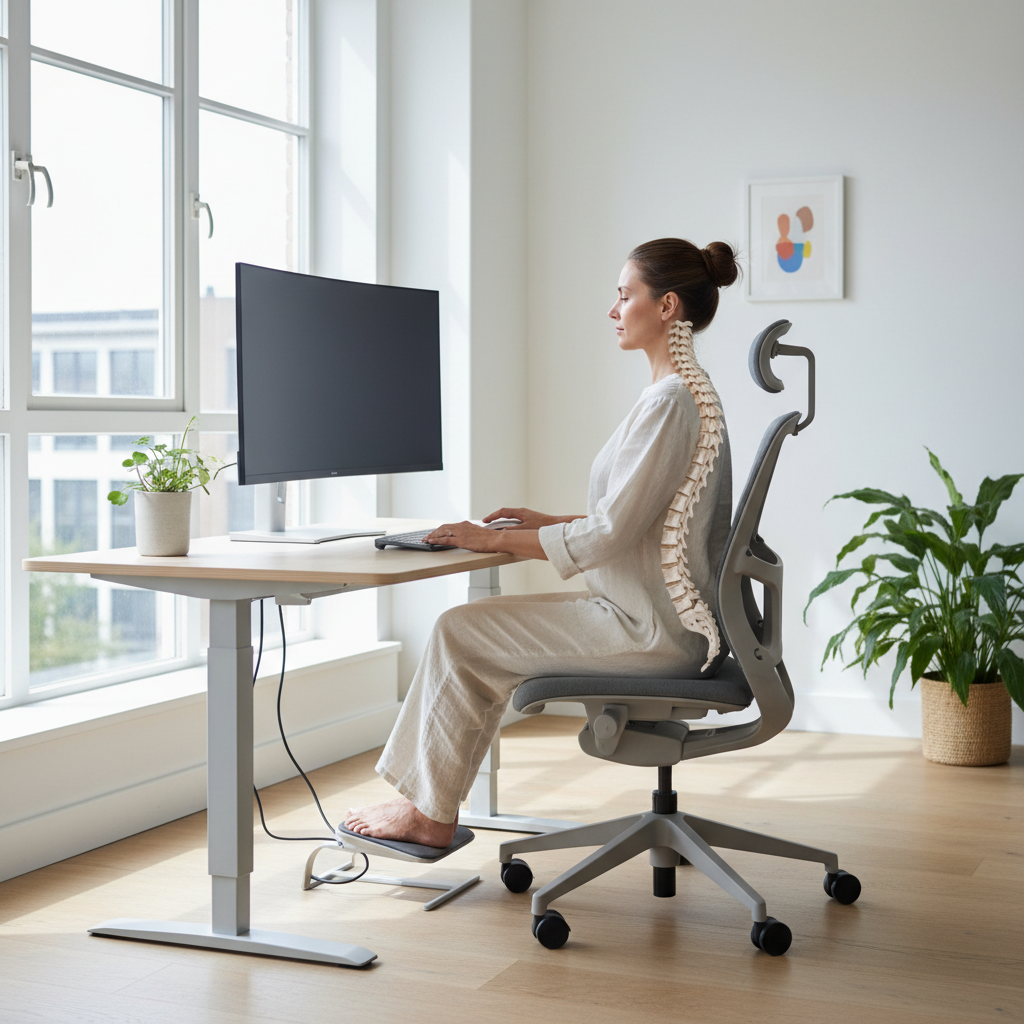
- Set up your workstation so your screen is at eye level and your chair supports your lower back.
- Practice the "tall sit" — imagine a string pulling the crown of your head toward the ceiling, and feel your spine lengthen.
- Take three deep, full breaths every hour to reset your breathing pattern and remind yourself to sit up.
- Move regularly — even 2 minutes of standing and gentle movement every hour can interrupt the fatigue cycle.
- Notice your posture when you're tired. Fatigue often causes posture to deteriorate, which then makes fatigue worse — breaking this cycle starts with awareness.
Better posture isn't about looking more professional or sitting rigidly upright. It's about allowing your body to function more efficiently — so that the energy you have goes toward the things that matter, rather than being spent compensating for misalignment.