

You've had a difficult day. A challenging meeting, a tight deadline, a difficult conversation. By the time you get home, your shoulders feel like they're up around your ears, your neck is tight, and there's a familiar tension across your upper back. You might attribute this to sitting at your desk all day — and that's partly true. But stress is playing a significant role too.
The connection between psychological stress and physical muscle tension is well-established. Understanding this connection — and what you can do about it — is an important part of everyday wellness for anyone living and working in a demanding environment.

The Stress-Tension Connection
When your brain perceives stress — whether it's a physical threat or a difficult email — it activates the sympathetic nervous system, triggering the body's stress response. Part of this response involves muscle tension: your muscles contract in preparation for action.
In a true emergency, this muscle tension is useful — it prepares your body to respond quickly. But in the context of modern work stress, where the "threat" is a difficult conversation or a looming deadline, this muscle tension has nowhere to go. The muscles contract, and then they stay contracted — because the stress doesn't resolve the way a physical threat would.
Where Tension Accumulates
Stress-related muscle tension tends to accumulate in predictable places: the neck, the upper trapezius (the muscles that run from your neck across your shoulders), the jaw, and the lower back. These are the areas where many people carry their stress — and where the physical effects of a stressful day are most noticeable.
Over time, chronic stress can contribute to persistent muscle tension in these areas — a pattern that many people come to accept as simply "how their body feels," without recognizing the role that stress is playing.
Stress causes muscle tension, which affects posture. Poor posture increases physical discomfort, which increases stress. This cycle can be difficult to break — but awareness of it is the first step.
The Role of Breathing
One of the most immediate physical effects of stress is a change in breathing pattern. Under stress, breathing tends to become shallower and faster, centered in the chest rather than the diaphragm. This chest-dominant breathing pattern actually activates the muscles of the neck and upper chest — contributing to the tension that accumulates in these areas.
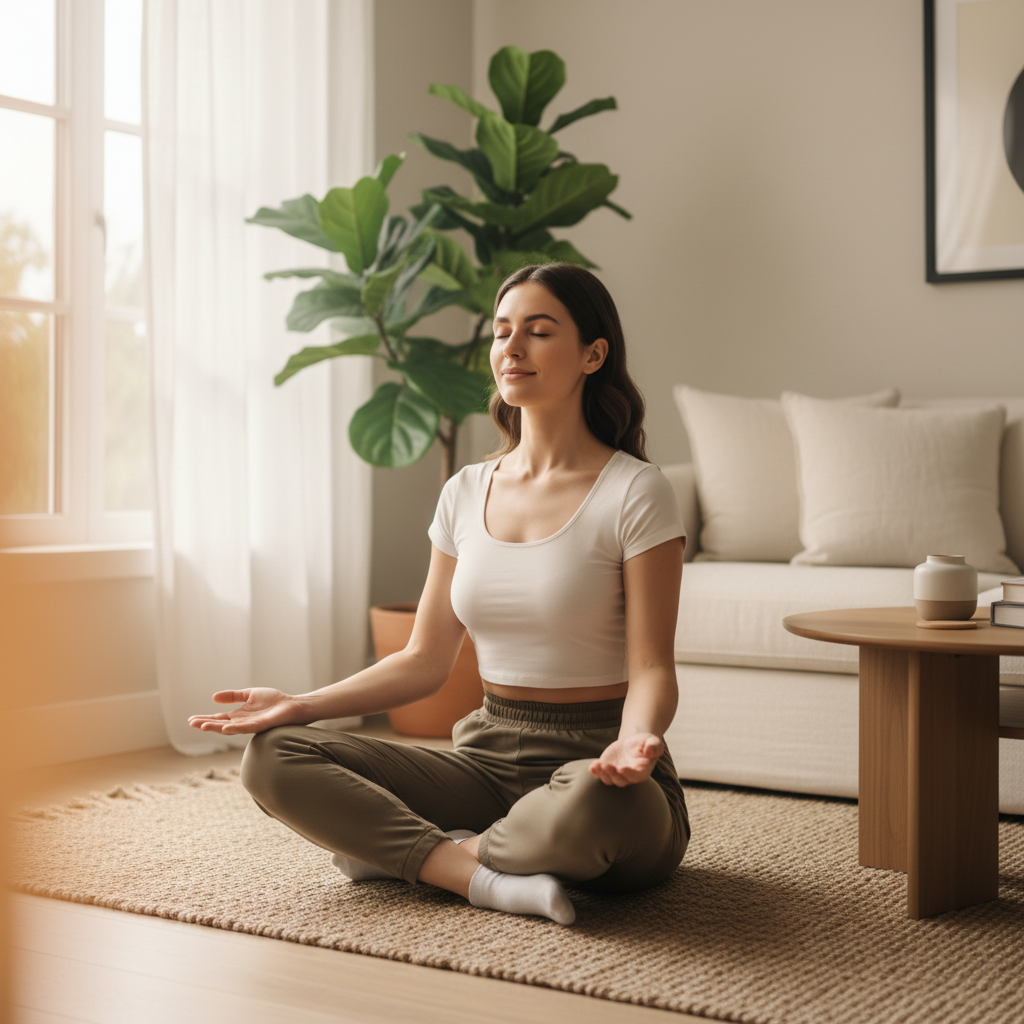
Conversely, slow, deep diaphragmatic breathing activates the parasympathetic nervous system — the body's "rest and digest" mode — and can help reduce muscle tension throughout the body. This is why breathing exercises are such a consistent feature of relaxation and wellness practices.
The Importance of Recovery
Just as physical exercise requires recovery, so does the sustained stress of a demanding workday. Without adequate recovery — time for your nervous system to downregulate, your muscles to release tension, and your body to return to a resting state — the effects of daily stress accumulate.
This is why the transition from work to rest matters. The habits you build around the end of your workday — how you decompress, how you create space between work and sleep — have a significant impact on how your body feels and how well you recover.
What You Can Do Today
- Practice diaphragmatic breathing: place one hand on your belly and breathe so that your hand rises with each inhale. Do this for 5 breaths whenever you notice tension building.
- Do a "tension scan" at the end of each hour: check your shoulders (are they raised?), your jaw (is it clenched?), and your hands (are they gripping the keyboard?). Consciously release any tension you find.
- Create a clear end-of-workday ritual — close your laptop, change your environment, and signal to your body that the workday is over.
- Spend time in gentle movement after work — a walk, gentle stretching, or any activity that helps your body transition out of the stress response.
- Prioritize sleep — the nervous system does much of its recovery work during sleep, and poor sleep makes stress harder to manage.
The tension in your body after a stressful day is real and physical — not just "in your head." Treating it with the same seriousness as physical fatigue, and building habits that support genuine recovery, is an important part of sustainable everyday wellness.