For most of human history, the primary health goal was simple: survive. Live as long as possible. Avoid disease. Reach old age. And for much of the 20th century, medicine focused almost entirely on extending lifespan — adding years to life.
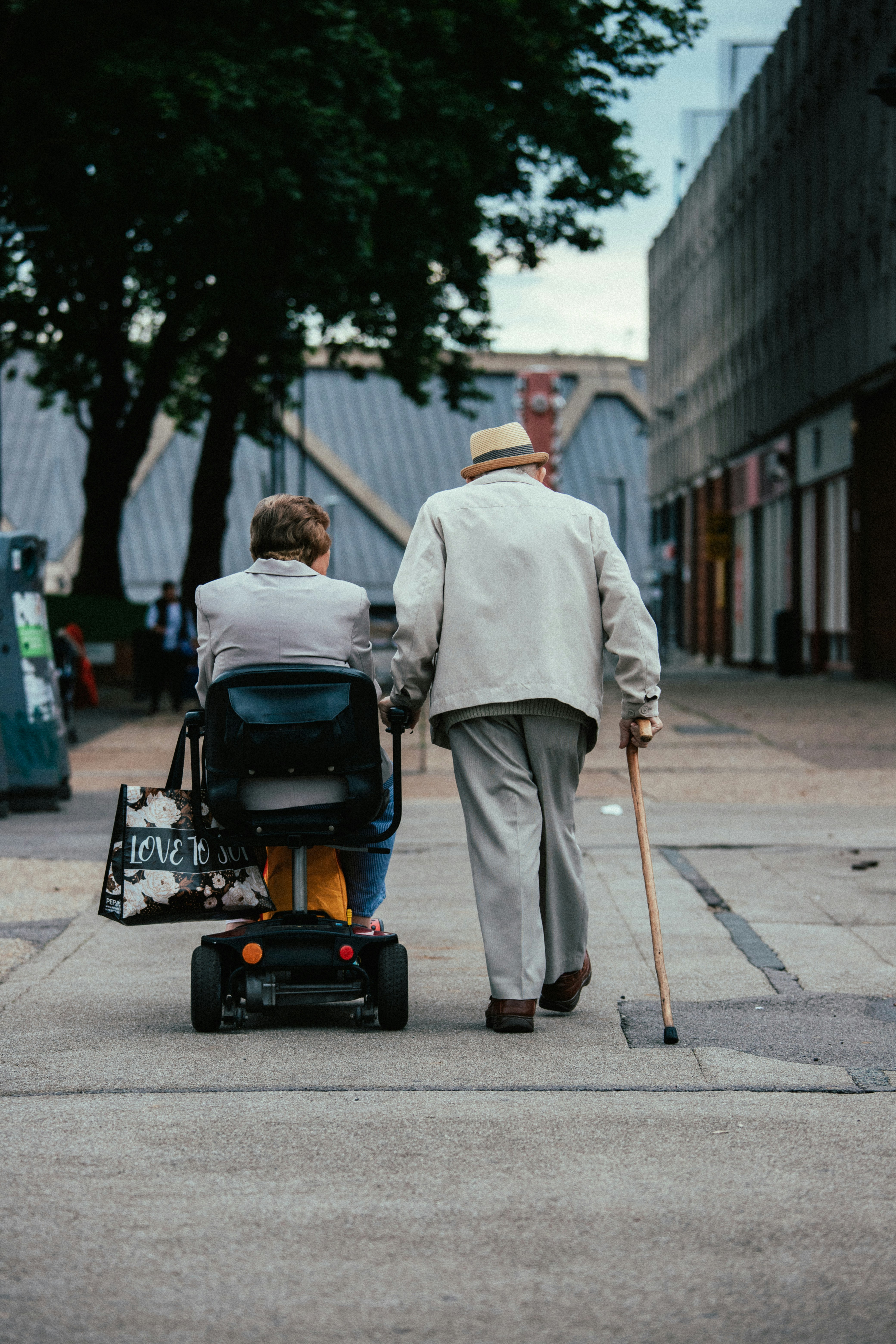
But a quiet revolution has been taking place in how we think about aging. Researchers, physicians, and wellness practitioners are increasingly focused on a different question: not just how long we live, but how well we live. This is the distinction between lifespan and healthspan — and it may be the most important wellness concept of our time.

What Is Lifespan?
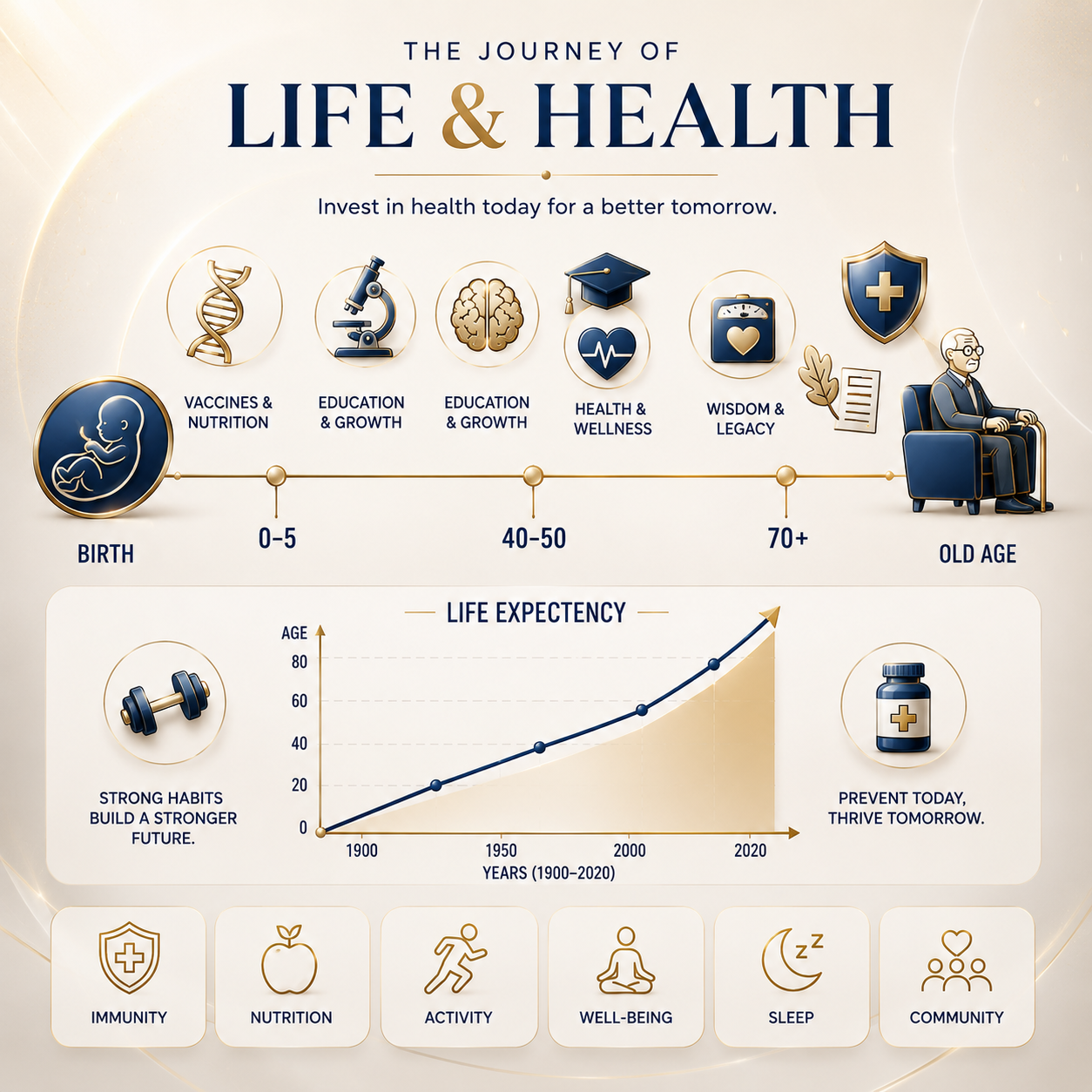
Lifespan is the total number of years a person lives. It is a straightforward measure — the distance between birth and death. Modern medicine has been remarkably successful at extending lifespan. Average life expectancy has increased dramatically over the past century, driven by advances in sanitation, nutrition, vaccines, and medical treatment.
What Is Healthspan?
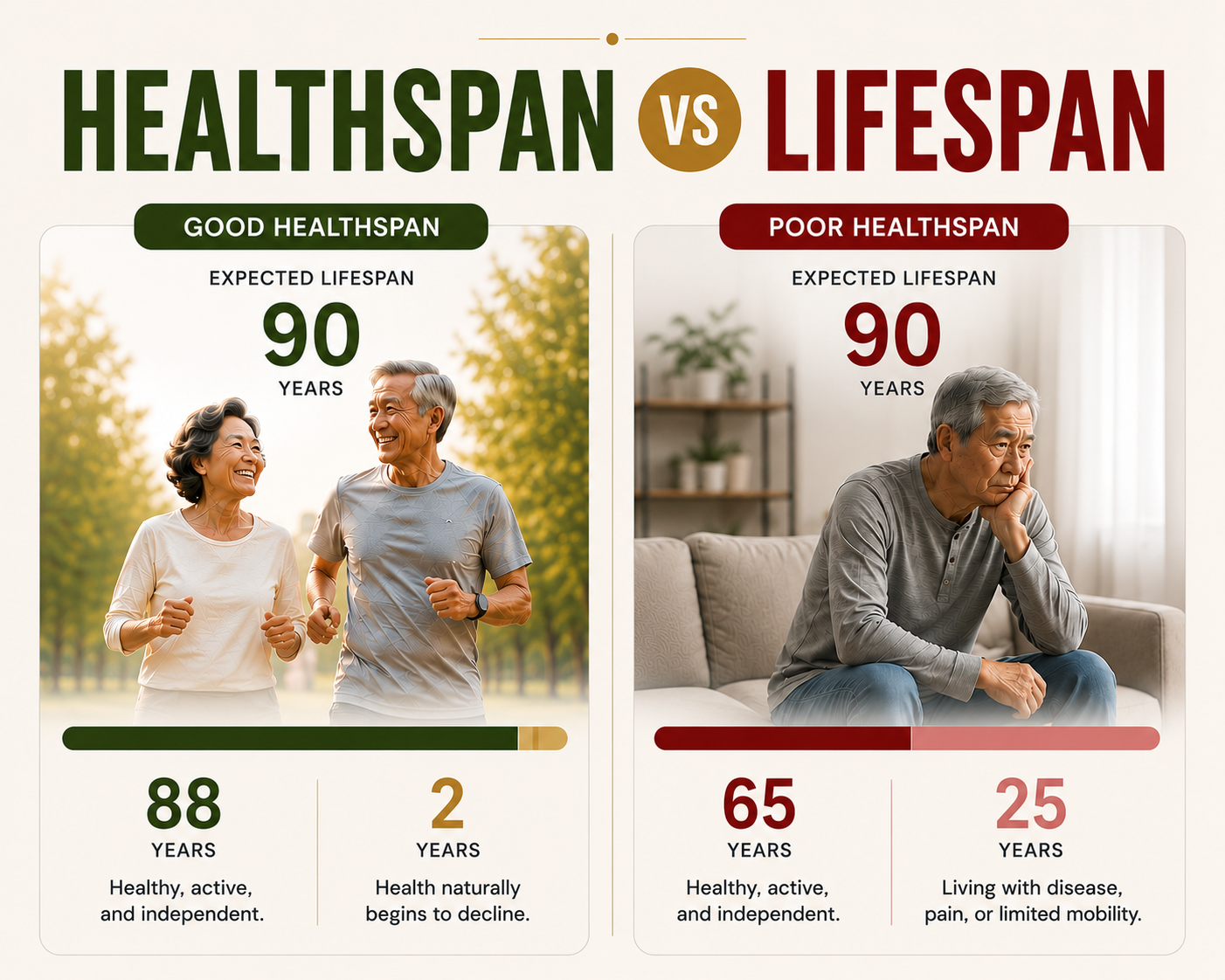
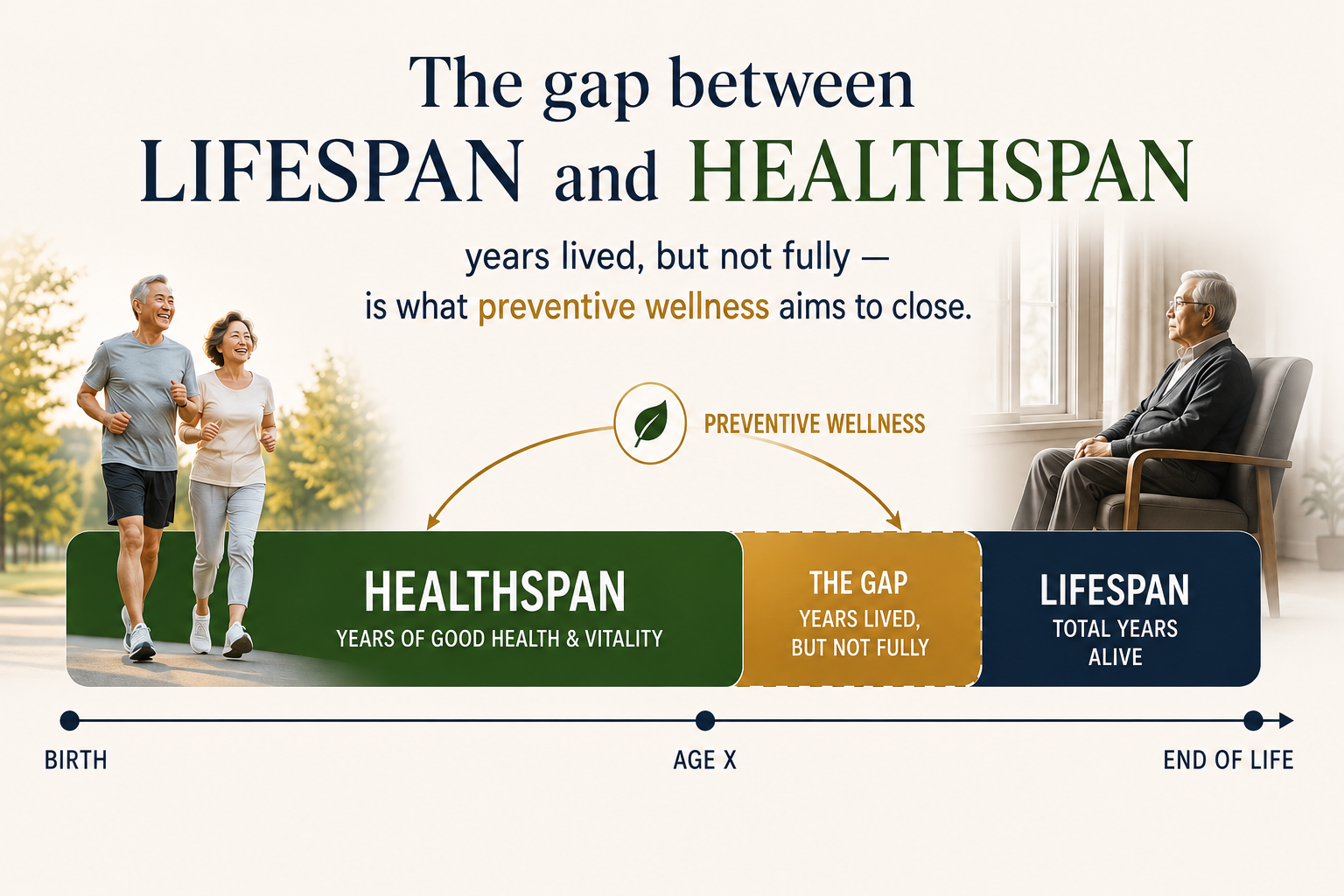
Healthspan is the number of years a person lives in good health — with the physical and cognitive function needed to live independently, actively, and with a high quality of life. It is not simply the absence of disease. It is the presence of vitality.
A person might live to 85 but spend the last 15 years of their life with significant physical limitations, chronic pain, or cognitive decline. Their lifespan is 85 years. Their healthspan might be 70. The gap between those two numbers represents years of life that are lived, but not fully.
Why the Distinction Matters
The gap between lifespan and healthspan is not inevitable. It is, to a significant degree, influenced by the habits and choices we make throughout our lives — particularly in our 40s, 50s, and 60s, when the foundations of how we age are being laid.

This is why the healthspan conversation matters so much. The decisions you make today about movement, recovery, sleep, stress, and self-care are not just about how you feel this week. They are investments in the quality of your life decades from now.
The Pillars of Healthspan
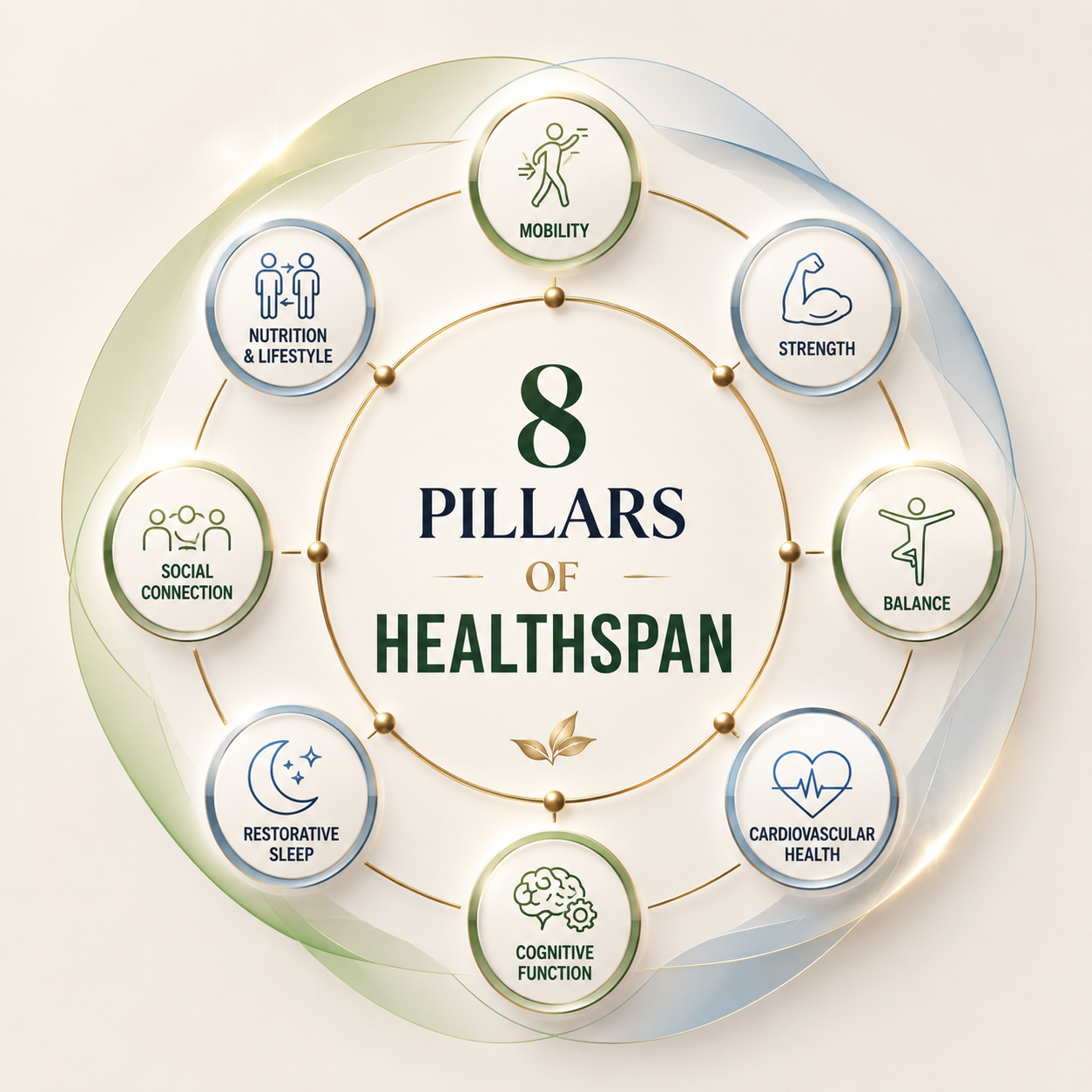
- Mobility and flexibility: The ability to move freely, without pain, through a full range of motion.
- Strength: Maintaining muscle mass and functional strength, which decline naturally with age but can be preserved with consistent activity.
- Balance: A critical factor in fall prevention and independent living as we age.
- Cardiovascular health: The fitness of the heart and circulatory system, which supports energy, endurance, and organ function.
- Cognitive function: Mental clarity, memory, and the ability to learn and adapt.
- Recovery capacity: How well the body bounces back from physical and mental stress.
- Sleep quality: The foundation of virtually every aspect of physical and mental health.
- Social connection: Consistently linked to better health outcomes and longevity in research.
Preventive Wellness and the Aging Conversation
One of the most important shifts in modern wellness thinking is the move from reactive to preventive. Rather than waiting for problems to appear and then treating them, preventive wellness focuses on maintaining function, mobility, and vitality before decline sets in.

This does not require extreme measures. It requires consistency. Regular movement. Adequate sleep. Stress management. Recovery practices. These are not complicated interventions — but they are powerful ones, particularly when maintained over years and decades.
Practical Habits That Support Healthy Aging

- Move consistently — not necessarily intensely. Daily walking, stretching, and light activity maintain mobility and circulation.
- Prioritise sleep. Sleep quality tends to change with age; protecting it becomes increasingly important.
- Manage stress actively. Chronic stress accelerates many aspects of biological aging.
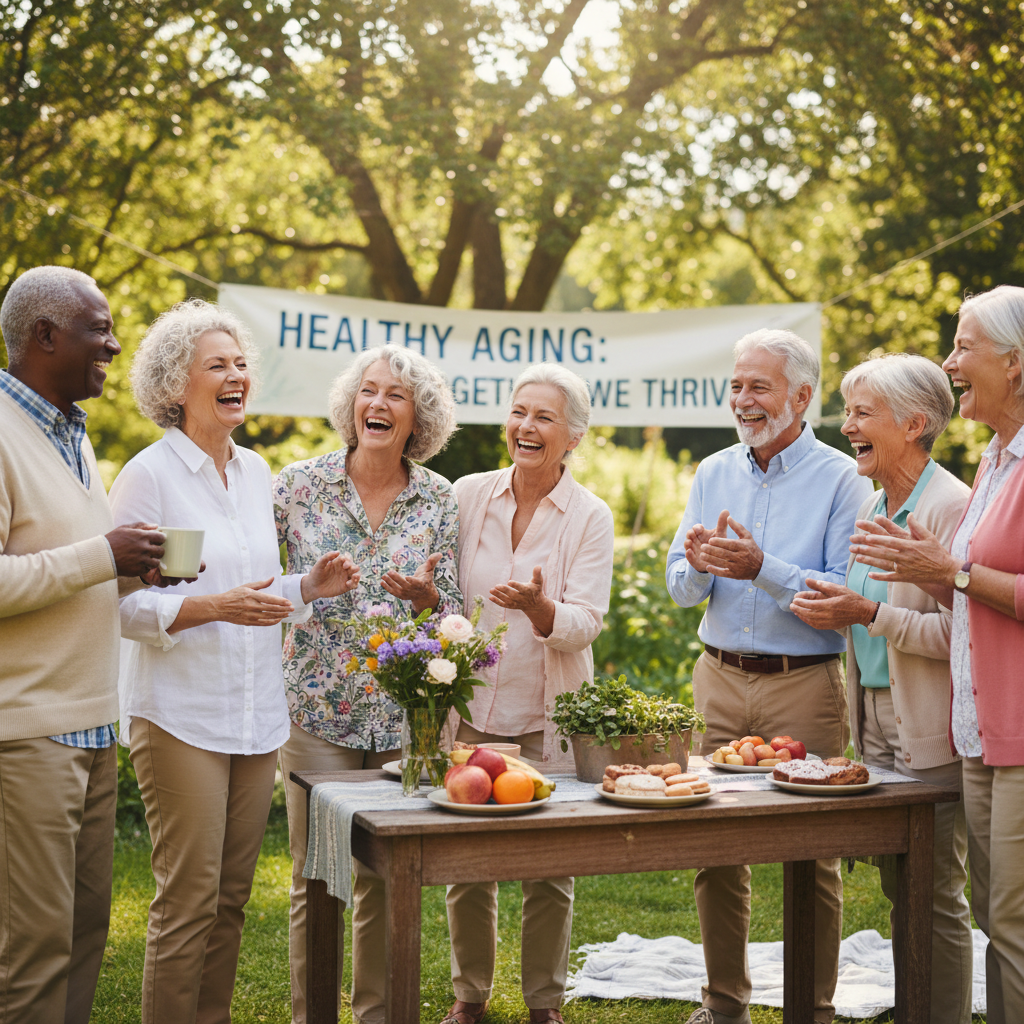
- Maintain social connections. Isolation is one of the most significant risk factors for accelerated decline.
- Invest in recovery. Regular relaxation, thermal wellness, and recovery practices support the body's natural restoration processes.
- Stay curious and mentally active. Cognitive engagement supports brain health throughout life.
- Schedule regular health checks. Early awareness of changes allows for earlier, more effective responses.

What You Can Do Today
You do not need to wait until you are older to start thinking about healthspan. The habits that support healthy aging are the same habits that support feeling well right now. They are not separate goals — they are the same goal, viewed across different time horizons.

Start with one question: What would I need to do consistently, starting today, to feel as good as possible at 70, 80, or 90? The answer to that question is your healthspan strategy.
Key Takeaway
Lifespan is how long you live. Healthspan is how well you live. The goal of modern wellness is not simply to add years to life — it is to add life to years. And the most powerful way to do that is through consistent, preventive wellness habits that support your body's function, mobility, and vitality across every decade.

- Discover the CERAGEM Shaw Wellness Lounge — a dedicated environment for relaxation, self-care, and spine wellness.
- Experience CERAGEM Shaw: ceragemshaw.com/visit
- Explore the CERAGEM Master V4 thermal wellness technology.
Educational Disclaimer: The information provided in this article is for general educational and wellness purposes only and is not intended to diagnose, treat, cure, or prevent any medical condition. Consult a qualified healthcare professional for personalised health guidance.